iPhone Duo
Accessibility enters the foldable era.
Apple has just introduced iPhone Duo, its first foldable iPhone. A new format means new possibilities. And new challenges for digital accessibility.
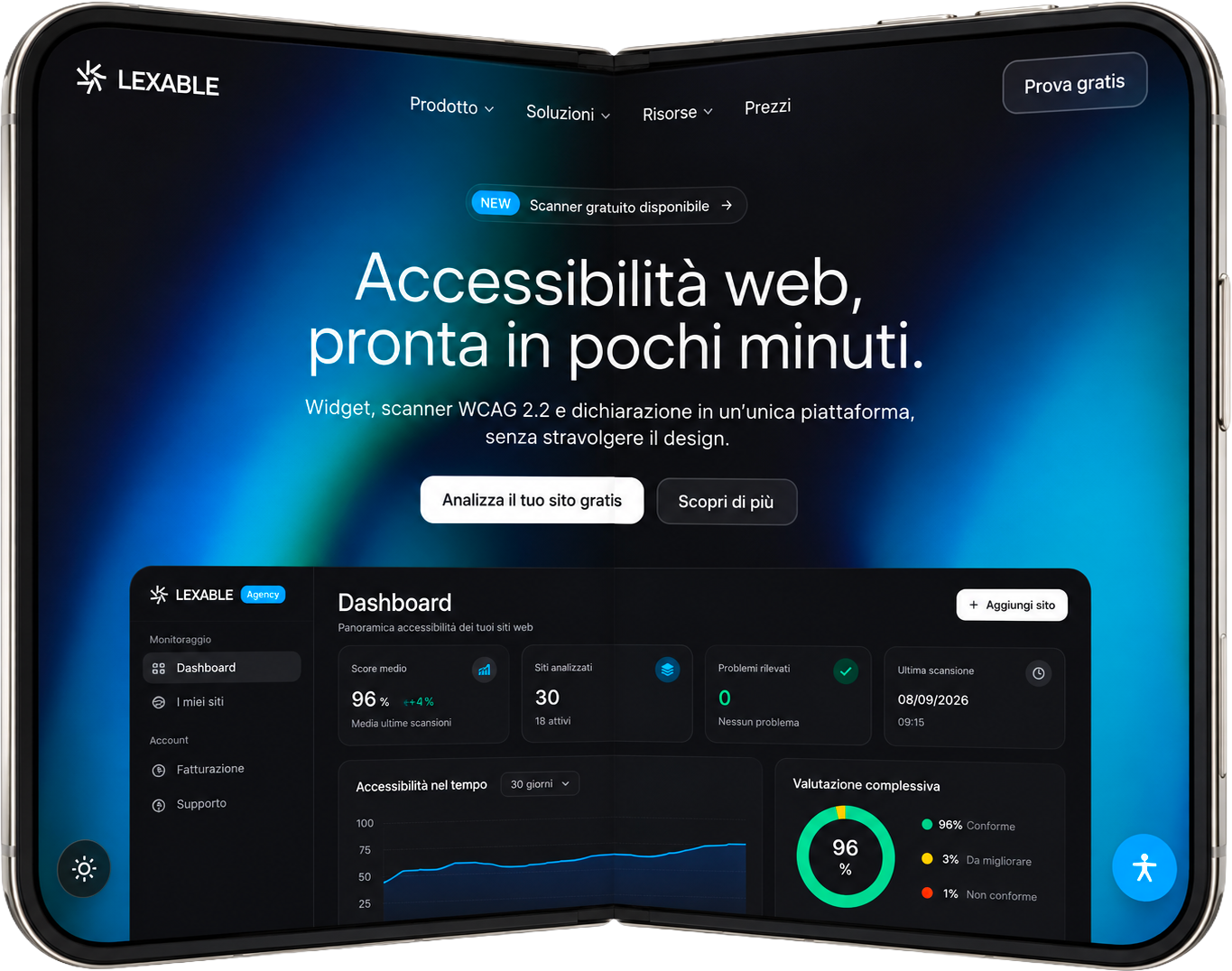
The question
When the screen changes, so does the way we interact.
A foldable is not just a larger screen. It introduces a new way of using the web.
-
Two displays
Content that can live on one panel, the other, or both together.
-
More orientations
Portrait, landscape, and the transitions between them while the device is in use.
-
More sizes and ratios
From a compact format to a wide canvas, with proportions that change in seconds.
-
Content that adapts
Layouts that reflow while the device changes configuration.
-
New ways of using it
In one hand, open like a book, on a table. Each pose changes the interaction.
Apple itself, in the iPhone Duo developer guidelines, talks about device poses, dynamic layouts across both displays, and interfaces that must adapt to different configurations.
The challenge
The real challenge is not only making a new device accessible. It is designing experiences that stay accessible as the device changes shape.
-
A visual element must remain understandable even as the layout changes.
-
Text and controls must keep consistent sizes and hierarchy.
-
Keyboard and assistive-technology navigation must follow a logical structure.
-
Contrast, readability and motion become even more important when the interface changes configuration.
Hardware can change shape. Accessibility should not change priority.
The future of the web will not be defined by a single screen, a single size, or a single way of interacting. That is why accessibility must be part of the design, not a fix at the end.
LEXABLE
Preparing the web for every person. And every device.